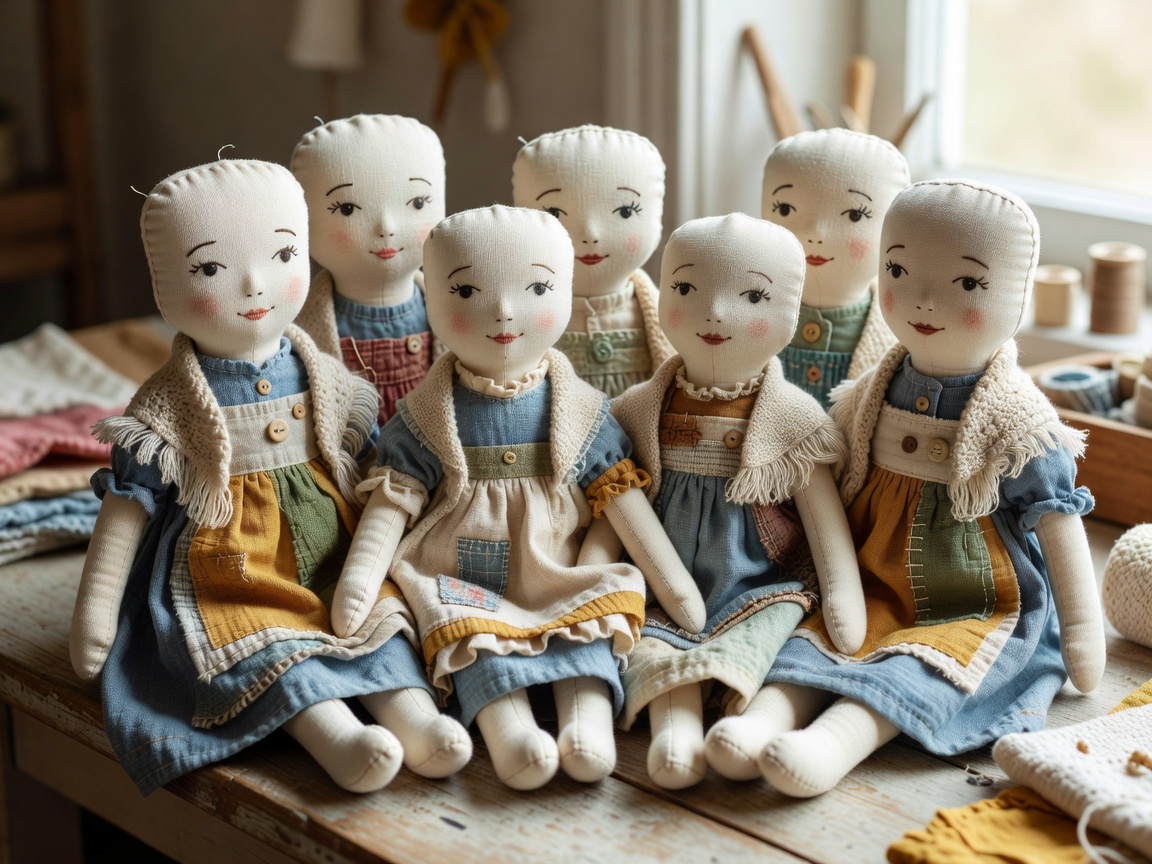
European dolls are made in many materials and for different purposes. A doll may be a play object, a domestic craft, a costume study, a keepsake or part of a ceremonial context. Traditions cross modern national borders. Similar materials and methods appear in neighboring areas, while local forms change over time. This overview describes broad approaches rather than assigning shared practices to a single country.
Textile, wood and painted forms
Textile dolls use fabric, thread and fillings to establish body, clothing and expression. Some are assembled from simple shapes; others use layered garments and detailed stitching. Household sewing skills and available cloth can shape their proportions. Wool, cotton and linen each bring different texture and drape. Decoration may include embroidery, applied pieces, woven trim or carefully chosen color.
Carved wooden dolls use the material itself to define a figure. A turned body can create a smooth, balanced profile; carving can distinguish limbs, clothing or facial features. Painted figures may combine a shaped base with surface color and line. These categories overlap: a figure can have a wooden head and a textile body, or clothing added to a carved form.
Regional approaches across Europe
In Central Europe, textile work, painted figures and turned wooden forms sit within a varied history of domestic and workshop production. Alpine regions have their own material conditions and costume references, but Alpine dress is not a single uniform template. A costume detail can be specific to a community, period or purpose.
Eastern Europe includes diverse textile and carved figure traditions. Embroidery, layered cloth and painted ornament occur in multiple local contexts; motifs should be read in relation to their source rather than treated as a generic regional style. The Baltic region also has distinct textile and material histories. Shared northern and eastern influences do not erase local differences.
Northern European dolls may use cloth, wood and simple graphic features, with forms shaped by local resources and household skills. Western Europe includes a wide range of domestic, commercial and artistic doll production. Mediterranean Europe adds varied textile practices, painted surfaces and regional dress traditions. These are broad geographic groupings, not fixed boundaries. Trade, migration and cultural exchange move techniques and forms.
Costume and context
Clothing can be a construction element, a record of textile practice or a sign of place and occasion. Some dolls represent everyday dress; others use ceremonial, festive or stylized clothing. A costume doll is not automatically a reliable document of historical dress. Date, region, maker and purpose matter. When those details are unknown, describe visible features and avoid assigning a precise origin.
Household craft has often shaped doll making. Reused cloth, scraps and basic sewing methods can turn available materials into a figure. Other production is specialized or made for exchange. Scale, finish and complexity vary with purpose. A simple cloth figure and a carefully detailed costume doll belong to different design contexts, even if both are handmade.
Historical object or modern interpretation?
A historical doll is an object from its own period, interpreted through evidence such as materials, construction and documented provenance. A modern interpretation borrows, adapts or reimagines a historical form. Contemporary makers may use current fabrics, simplified faces or updated proportions. That work can engage tradition without being presented as an unchanged survival of it.
- Record known date, materials and documented location separately.
- Describe costume details before naming a regional source.
- Use “inspired by” when a contemporary design adapts historic references.
- Recognize that cross-border practice makes exclusive ownership claims unreliable.
Good for
Textile dolls suit close study of stitching, layering and costume. Carved and painted figures make material shaping and surface design easier to compare. Mixed-media forms reveal how different craft skills work together.
What to know
A regional label needs evidence. Similar motifs can appear in more than one place, and clothing changes by period and context. Treat broad regional descriptions as starting points, not proof of origin. For a contemporary doll intended for children, suitability depends on age, construction, fabric and finish, small-part considerations, local requirements and appropriate testing.